


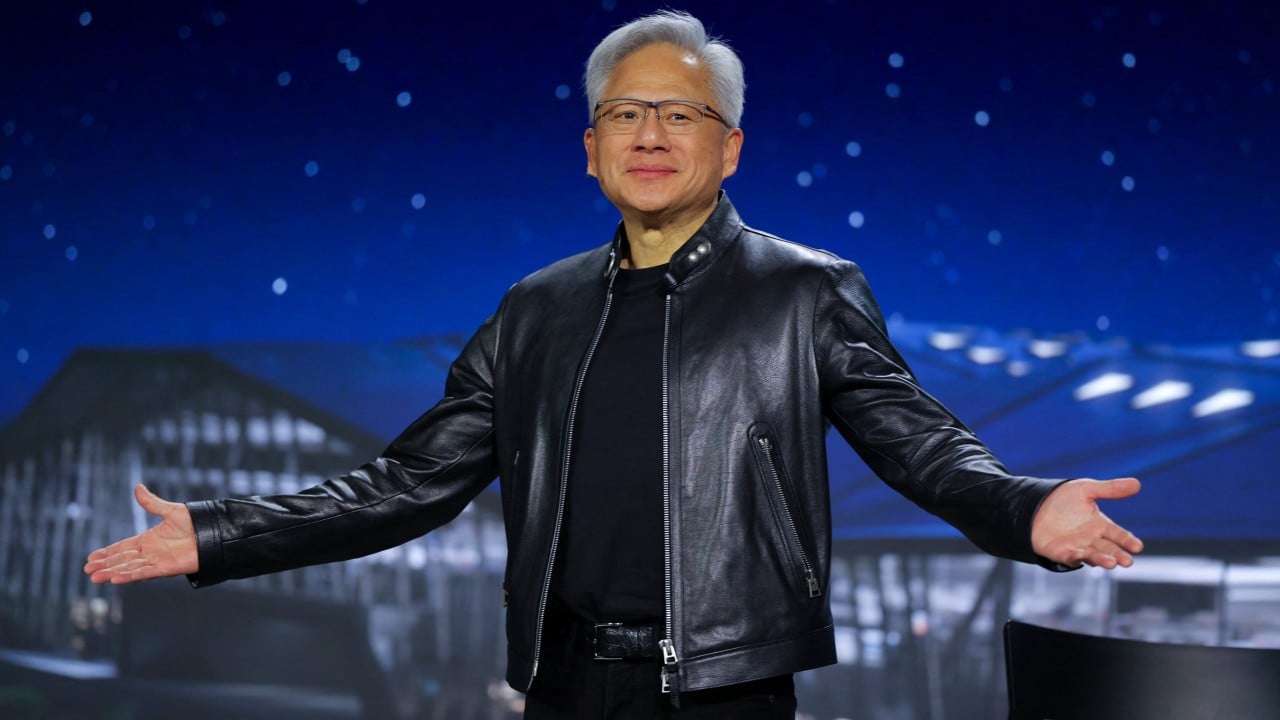
If “future AI models are optimised in a very different way than the American tech stack”, and as “AI diffuses out into the rest of the world” with Chinese standards and technology, China “will become superior to” the US, Huang said on the Dwarkesh Podcast on Wednesday.
The conversation came ahead of the much-awaited launch of DeepSeek’s V4 foundation model, expected later this month. US news outlet The Information reported earlier this month that V4 would run on Huawei’s latest Ascend 950PR processor, while a separate report by Reuters last month suggested that the model had been trained on Nvidia’s Blackwell chips, which would be a violation of US export controls.
Advertisement
DeepSeek’s V3 model, launched in late 2024, was trained on 2,048 Nvidia H800 graphics processing units (GPUs), based on the ageing Hopper technology. The product, tailor-made for the China market to circumvent export controls, was banned from sale to China in 2023. Regulatory restrictions had eased recently under the Trump administration, with Nvidia restarting production of the H200, a more powerful chip, to be sold in China, Huang said in March.
Advertisement