This week, two former senior officials from the Mexican state of Sinaloa, both accused by U.S. prosecutors of ties to the Sinaloa Cartel, surrendered to American authorities in separate incidents.
Retired Mexican army general Gerardo Merida Sanchez, the former Minister of Public Security for Sinaloa state, turned himself in to the U.S. Marshalls after crossing the U.S. border in Hermosillo, Sonora. He was arrested and appeared in court in Tucson, Arizona, before being sent to New York. This afternoon, he plead “not guilty”.
Merida Sanchez was one of nine Mexican officials indicted by the Southern District of New York in late April, in an unprecedented targeting of accused Mexican politicians and security figures allegedly working for the Chapitos faction of the Sinaloa Cartel.
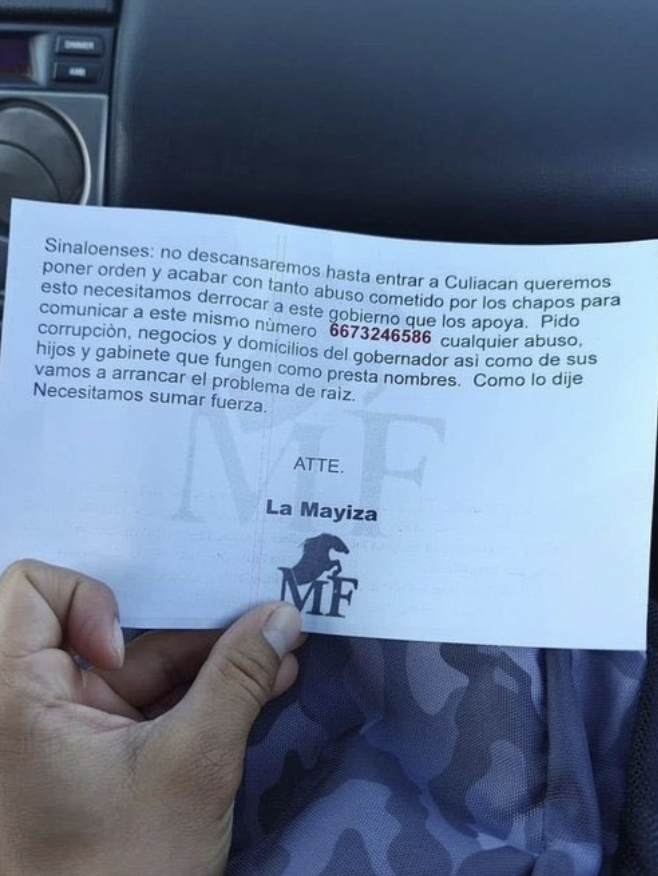
Merida Sanchez was the Sinaloa state security chief between April 2023 and December 2024, when he resigned after violence between the two factions of Sinaloa Cartel resulted in massive increases and shootouts, homicides, and disappearances. In October 2024, the Mayo Zambada faction of the Sinaloa Cartel dropped leaflets over Culiacan alleging the Chapitos of operating with government support, a claim which Merida Sanchez denied.
Today, Enrique Díaz Vega, former Secretary of Administration and Finance of Sinaloa state, also turned himself in to U.S. authorities. News media report that he turned himself in to a U.S. Consulate in Europe, before being arrested and flown to New York. Díaz Vega was a close political ally and family friend of Rubén Rocha Moya, Sinaloa’s governor who resigned two weeks ago after being the center of U.S. allegations of cartel corruption.
These two figures are the first to fall after the U.S. increased targeting of corrupted Mexican officials.
On April 29, the SDNY indicted Sinaloa Governor Rubén Rocha Moya, the mayor of Culiacán, and seven other Mexican officials on charges tied to collaboration with the Sinaloa Cartel. The allegations cover a wide range of Sinaloa state figures, from politics to policing.
The indictment, which relies on testimony from senior cooperating cartel figures in U.S., alleges deep cartel penetration of state institutions, including interference in Moya’s 2021 election, meetings between officials and cartel leaders to negotiate non-enforcement, and police kidnappings carried out on cartel orders. Mexican President Sheinbaum rejected an extradition request from U.S. authorities, stating that Mexico would comply if provided with evidence, either from the U.S., or from their now launched investigation.