


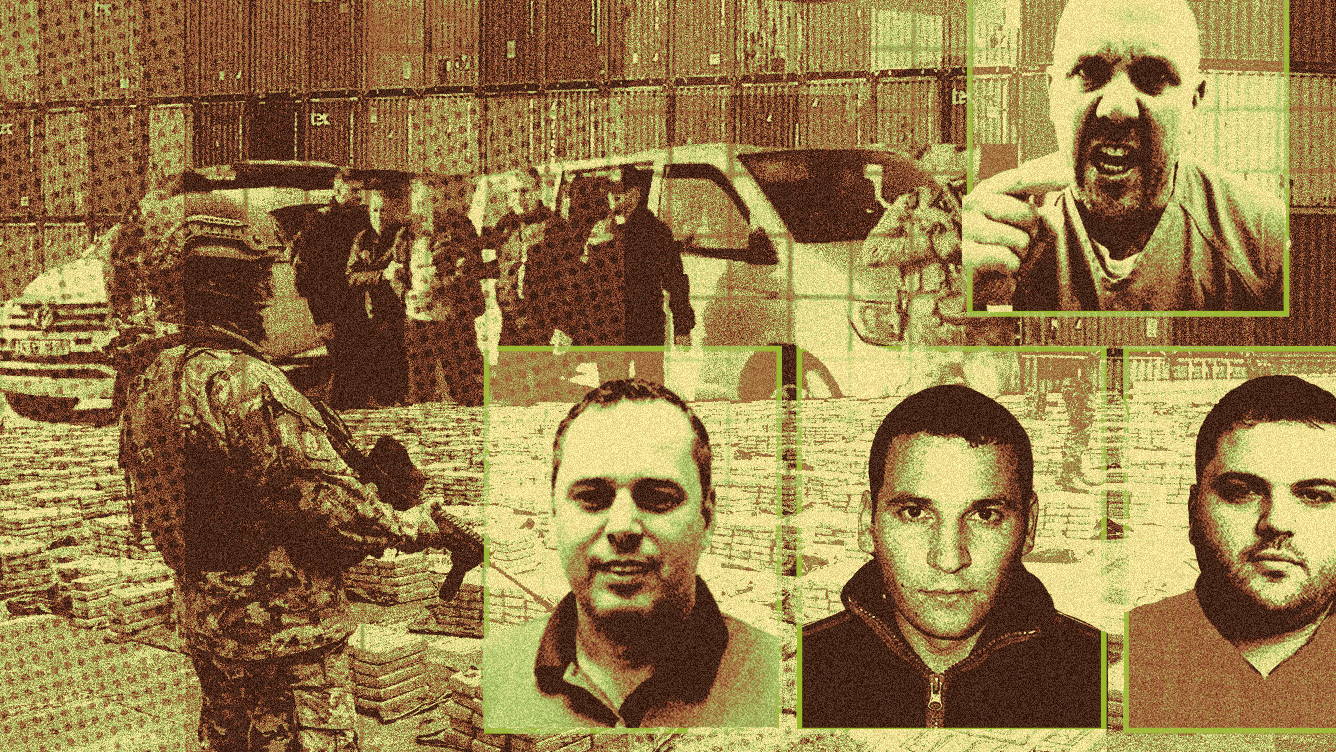
The recent arrest of alleged Albanian drug trafficker Ervin Mata in Brazil is the latest example of how Balkan-origin criminal service providers operate in Latin America.
Mata, who was arrested April 26 near São Paulo, is accused of serving as a bridge between South American suppliers and European buyers for a Balkan criminal organization that oversaw cocaine shipments from Brazil to Europe via ports in countries like Spain and Germany.
Mata is part of a long line of Balkan traffickers to be arrested or killed in Latin America. These criminal actors—hailing from countries like Albania, Serbia, and Montenegro with a history of powerful mafias—have become key actors in cocaine trafficking and money laundering schemes in the region.
Rather than building territorial strongholds like traditional Latin American crime groups, Balkan criminals have embedded themselves along an increasingly fragmented cocaine supply chain, managing the routes, logistics, and relationships necessary to move cocaine from production facilities in the Andes to burgeoning consumer markets in Europe.
Below, we explain the main roles filled by Balkan criminal actors in the region.
The Emissaries
Balkan-origin criminal groups have cemented themselves as key gatekeepers of the growing European cocaine market. They distribute cocaine to cities around the continent, supplying local criminal organizations and wholesale buyers.
Balkan criminal networks are usually decentralized, based on family loyalties and business alliances rather than membership in a specific, easily identifiable criminal group. To negotiate deals, they send individuals to drug-producing and exporting countries like Colombia, Ecuador, and Brazil, where they negotiate deals with producers and partner with local groups that move and store drugs. The emissaries thus cut out local middlemen, increasing profits for their organization. Mata, who Albanian authorities believe is linked to a Balkan criminal organization, appears to have been one of these figures.
But there are others. One was DritanRexhepi, an Albanian criminal whose lengthy career included prison escapes in Italy and Belgium. He was a high-profile emissary for Kompania Bello, an Albanian network made up of 14 crime families. Rexhepi was detained in Ecuador along with a cocaine shipment in 2014, but he continued to coordinate shipments with Colombian and Ecuadorian criminal groups from behind bars until his release in 2021. Rexhepi was later arrested in Turkey in 2023 and is currently facing trial in Albania. While Europol claimed to have completely dismantled Kompania Bello in 2020, some former members continue to be prominent players in Latin America’s cocaine trade.
In another example, Clan Farruku, an Albanian family-based criminal organization, coordinated cocaine shipments between Ecuador and Spain. They allegedly sent emissaries to Ecuador to coordinate with Ecuadorian groups to export cocaine. One of these emissaries, Ergys Dashi, was murdered in the port city of Guayaquil in February 2022, just days after Spanish authorities seized two tons of cocaine in Cádiz that was later linked to Clan Farruku.
Independent Trafficking Specialists
In other cases, Balkan criminals in Latin America act independently and opportunistically, leveraging business prowess and personal connections with producers, local networks, and wholesale buyers in Europe rather than working at the behest of a specific Europe-based group.
Dritan Gjika, an Albanian who relocated to Ecuador and later became an Ecuadorian citizen, was one such influential independent trafficker. Gjika had no proven affiliation with any Balkan organized crime group. Instead, he allegedly formed alliances directly with Colombian producers and liaised with Ecuadorian groups that moved, stored, and contaminated shipping containers with cocaine in Guayaquil. As cover for his trafficking activities, Gjika allegedly established a network of legal export companies that sent products like bananas—one of Ecuador’s top exports—to European ports.
SEE ALSO: The Pioneering Albanian Trafficker Who Took Ecuador’s Drug Trade By Storm
Gjika’s reach extended to negotiating the price of cocaine shipments in Europe with a number of wholesale buyers based in port cities around the continent, according to text messages seen by the Organized Crime and Corruption Reporting Project. Gjika was captured in June 2025 in Abu Dhabi and awaits extradition to Ecuador, where he is wanted on organized crime and corruption charges.
Gjika was not the only Albanian in Ecuador to carve out space in the cocaine trade as an independent actor. Adriatik Tresa and Arber Çekaj both used similar models to Gjika, establishing their own export businesses in Ecuador that served as cover for cocaine trafficking.
Both allegedly hid cocaine in Europe-bound shipments of bananas. Tresa was shot dead in a Guayaquil suburb in 2020, and Çekaj was arrested in Germany in 2018.
Financial Crime Experts
Whether affiliated with a group or independent, many Balkan criminal actors in Latin America have specialized in laundering money from their own drug trafficking operations or their work for local or European groups.
Gjika, the independent Albanian trafficker, used his many front companies to launder over $31 million through Ecuador’s financial system between 2015 and 2024, according to prosecutors.
In November 2025, the United States Treasury Department sanctioned 27 individuals and entities linked to a Mexico-based money laundering scheme run by the Hysas, an Albanian crime family. US authorities allege the network—operating with the Sinaloa Cartel—launders drug money through casinos and luxury restaurants in Sinaloa, Sonora, and other Mexican states.
Money laundering was also a key criminal activity of Serbian national Jezdimir Srdan, who, after securing a controversial early release from prison in Ecuador on drug trafficking charges in 2018, was recaptured in 2024 and sentenced to 10 years in prison for money laundering.