


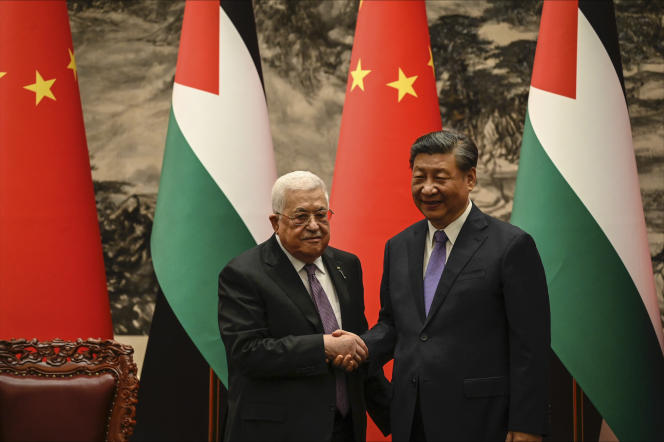
The Americans are talking to the Iranians, who are talking to the Saudis, who are talking to the Israelis, while the Chinese are offering their services to the Palestinians. If Ecclesiastes is to be believed, there is a time fo
On neutral ground, probably in Oman, the United States is in “talks” with Iran
The two sides had not been in contact since the failure of the nuclear dialogue conducted in Vienna in 2022 following European mediation. The Islamic Republic, increasing the number and power of its centrifuges, now produces uranium enriched to 60%. It would take two weeks to a month before it reached the 90% needed for weapons-grade uranium. That timeframe was a year with the limits imposed by the July 2015 Vienna agreement. But this agreement – concluded between Iran and the five “official” nuclear powers – was repudiated by Donald Trump in 2018. This unilateral decision was interpreted by Tehran as allowing it to free itself from all constraints.
However, a move from 60% to 90% would not be without negative consequences for Iran: Renewed sanctions, even possible Israeli or Israeli-American bombing raids; likely negative reaction from China and Russia, the Islamic Republic’s two protectors at the UN. As for Joe Biden’s administration, it has no intention of letting a crisis in the Gulf distract it from its priorities – Ukraine and China. On both sides, it’s in everyone’s interest to get along.
Possession of an operational nuclear weapon presupposes steps other than uranium enrichment, pointed out Setter in the daily Haaretz and ambassador Michel Duclos in an article published by think tank Institut Montaigne. The “militarization” would probably take another two years.
According to the Israeli and American media – mainly Haaretz and The New York Times – the Americans and Iranians have struck a deal. Not a formal agreement, much less a treaty, but a mutual “understanding.”
Iran has allegedly pledged not to cross the 60% threshold and will resume cooperation with United Nations inspectors and prohibit its militias, in Syria, Iraq and Lebanon, from attacking American interests. The US, The New York Times understands, will relax its embargo on the Islamic Republic’s oil. They would “release” a few billion Iranian dollars frozen in foreign banks but these funds could only be spent by the Islamic Republic on “humanitarian” purposes.
The Saudis between Iran, Israel and the United States
After a long cold spell, Riyadh reopened an embassy in Tehran last week. Iranian President Ebrahim Raissi has been invited to pay an official visit to Saudi Arabia. Thanks to a Chinese mediation, the two powers, which vie for regional preponderance, are normalizing their relations. They have been constantly at war with each other in recent years, whether directly or through their allies, and mistrust remains. The Saudi Arabia of Crown Prince Mohamed bin Salman, known as “MB”, is the backbone of a common front formed with Israel and the United States against Iranian expansionism.
You have 39.39% of this article left to read. The rest is for subscribers only.