


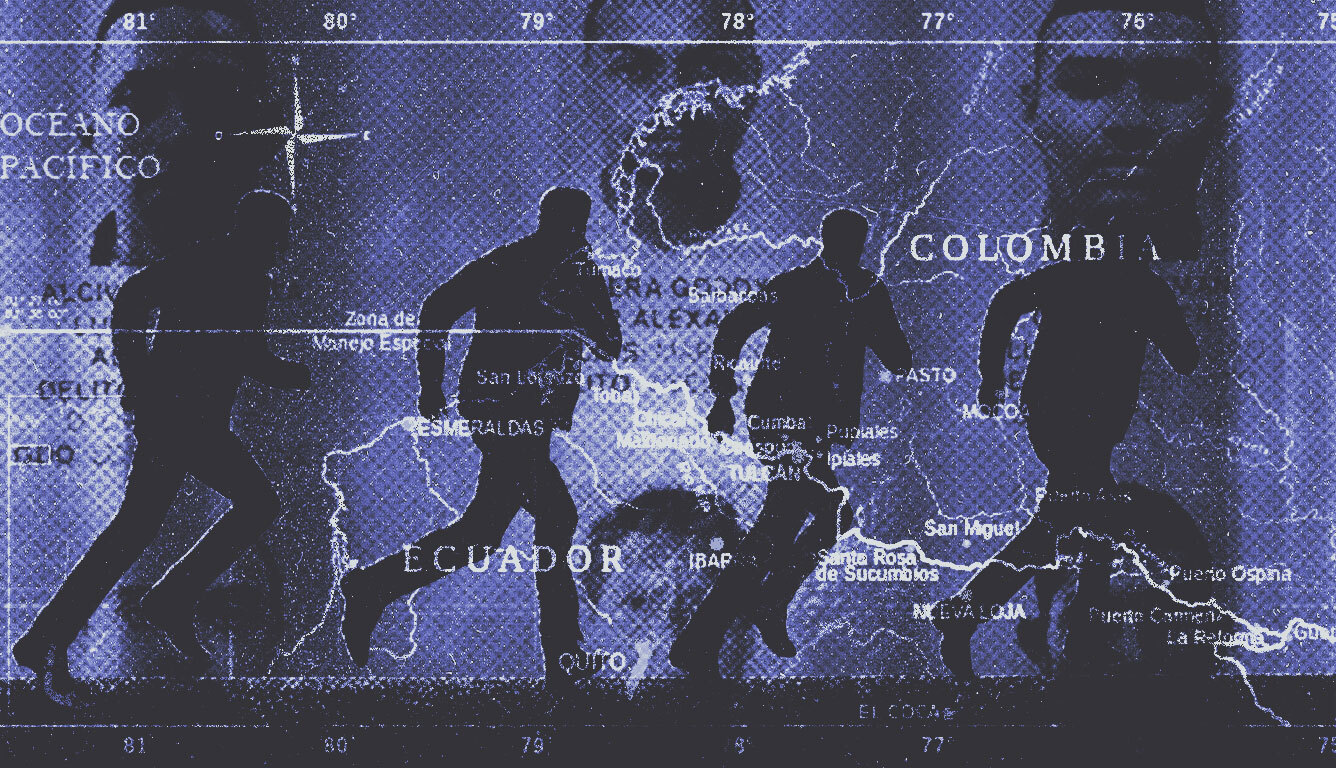
A trend of Ecuadorian criminal leaders turning up in neighboring Colombia underscores how the country serves as a refuge — as well as a potential graveyard — for bosses seeking to flee both state crackdowns and intense violence back home.
On May 30, Argentina’s Security Minister Patricia Bullrich announced that Terry Israel Camacho, alias “Trompudo,” was denied entry to the country at Buenos Aires’ Ezeiza International Airport. Trompudo, who arrived on a flight from Colombia’s capital Bogotá, is a top leader of the Chone Killers, one of Ecuador’s most prominent gangs.
“He was detected in Bogotá, we coordinated with Colombia, we were waiting for him in Ezeiza,” read the announcement, which was posted on social media.
Trompudo’s appearance in Bogotá followed a December 2024 assassination attempt against the gang boss and his brother, Antonio Benjamín Camacho, alias “Ben 10,” in the southwestern Colombian city of Cali. Despite early news media reports suggesting both brothers died in the attack, only Ben 10, who led the Chone Killers along with his brother, was killed, while Trompudo survived.
The attack against the brothers was just one of many cases of Ecuadorian gang leaders and drug traffickers appearing in Colombia over the course of the last 20 years.
In February, hitmen attacked Édinson Alexander Delgado Rocafuerte, alias “Saoco,” a leader of an upstart faction of the Lobos called Sao-Box, in Colombia’s Caribbean metropolis of Barranquilla. Saoco survived the attack, and fled the country shortly after, according to Expreso.
In May 2023, the body of Junior Roldán, alias “JR,” was found in a rural zone in the Colombian department of Antioquia. The leader headed Ecuador’s Águilas gang and was a close ally of Choneros leader José Adolfo Macías Villamar, alias “Fito.” Rumors persist, however, that JR faked his death.
A few years earlier in 2017, Colombian authorities captured Washington Prado Álava, alias “Gerald,” in the department of Nariño, along Colombia’s border with Ecuador. Gerald, dubbed “Ecuador’s Pablo Escobar,” was accused of trafficking at least 250 tons of cocaine.
SEE ALSO: Treasure, Corruption and Legal Machinations – Gerald’s Legacy in Ecuador
Jorge Luis Zambrano, alias “Rasquiña,” the architect of the rise of the Choneros in Ecuador’s prison system, also was captured in Colombia in 2013. Rasquiña had escaped from La Roca, Ecuador’s infamous maximum security prison, just months prior to his capture, eventually ending up in Bogotá.
Colombia: The Safe Haven?
Keen to escape spiraling conflict, Ecuadorian leaders are drawn to Colombia by various factors, including the low cost of living and easy access.
As gang violence has worsened in Ecuador, authorities have responded with massive police and military operations seeking to take out the country’s top leaders. This response, combined with compounding violence spurred by gang fragmentation, has made Ecuador more unsafe for top criminals.
“He cannot move in this territory because he will fall at any moment,” Lieutenant Colonel Herbie Guamaní, police chief of Guayaquil’s Nueva Prosperina district, told InSight Crime in April. He was referring to the case of a Tiguerones leader, Galo Xavier Suárez Román, alias “Wichi,” who authorities now believe is also hiding out in Colombia.
SEE ALSO: Massacres, Alliances, and Betrayals: Inside the Gang War That Tore Ecuador’s Tiguerones Apart
Pushed to leave, Colombia is an appealing destination, allowing leaders to fly under the radar. The land border between the countries is porous, meaning Ecuadorians can easily cross to Colombia, leaving no record of their departure. The cultural and geographical proximity of the two nations also means many Ecuadorians live in or visit Colombia, allowing criminal leaders to blend in with their compatriots. Colombia’s low cost of living compared to Ecuador could be an additional factor, affording Ecuadorian leaders a more luxurious lifestyle than they could find at home.
Ecuadorian leaders also travel to Colombia seeking more direct relationships with Colombian cocaine suppliers.
The vast majority of the world’s cocaine originates in Colombia, whose groups have accumulated significant power and wealth through their historic control of the drug’s exportation. Ecuadorian groups like the Choneros and Lobos, in turn, tend to occupy the role of mere service providers in this trade, working for these Colombian networks — in addition to Mexican and European ones — in roles like drug transportation, storage, and contamination of shipping containers.
In an attempt to move up the food chain, Ecuadorians have, at times, attempted to cut out middlemen and forge more direct agreements with drug suppliers, with varying success.
Gerald was the most successful, establishing direct drug supply links in Colombia. This allowed him to build one of the most prolific drug trafficking enterprises in history, earning the capo hundreds of millions of dollars in the process.
Colombia: The Cemetery
Attacks and arrests, however, show Colombia poses significant dangers to Ecuadorians as well.
For Luis Fernando Quijano, a Colombian organized crime expert, attacks against Ecuadorian leaders originate from groups back home, who, through connections, arrange hits in Colombia.
“Since there is an armed dispute between them, they have allies here,” he told InSight Crime. “It’s the same level of risk [as Ecuador].”
The presence of Ecuadorians in Colombia, whether they’re attempting to expand their business or searching for refuge, also threatens to disrupt the established networks that have benefitted Colombian drug traffickers and criminal groups for years. This could be another driver of the string of violent attacks against these individuals.
“Most of the drug traffickers that go from here to Colombia think they will be told, ‘Brother, come, sit down,’” Lieutenant Colonel Santiago Gavilanes, police chief of Durán, the homebase of Ben 10 and Trompudo in Ecuador, told InSight Crime in April. “But [the Colombians] are not interested. You are just one more to them.”
Capture is also a major risk for Ecuadorian leaders in Colombia. Colombian authorities, with decades of experience fighting criminal groups, have well-established intelligence ties with foreign partners like the United States, Europol, and Interpol. This enhances their ability to capture transnational traffickers and crime leaders.