


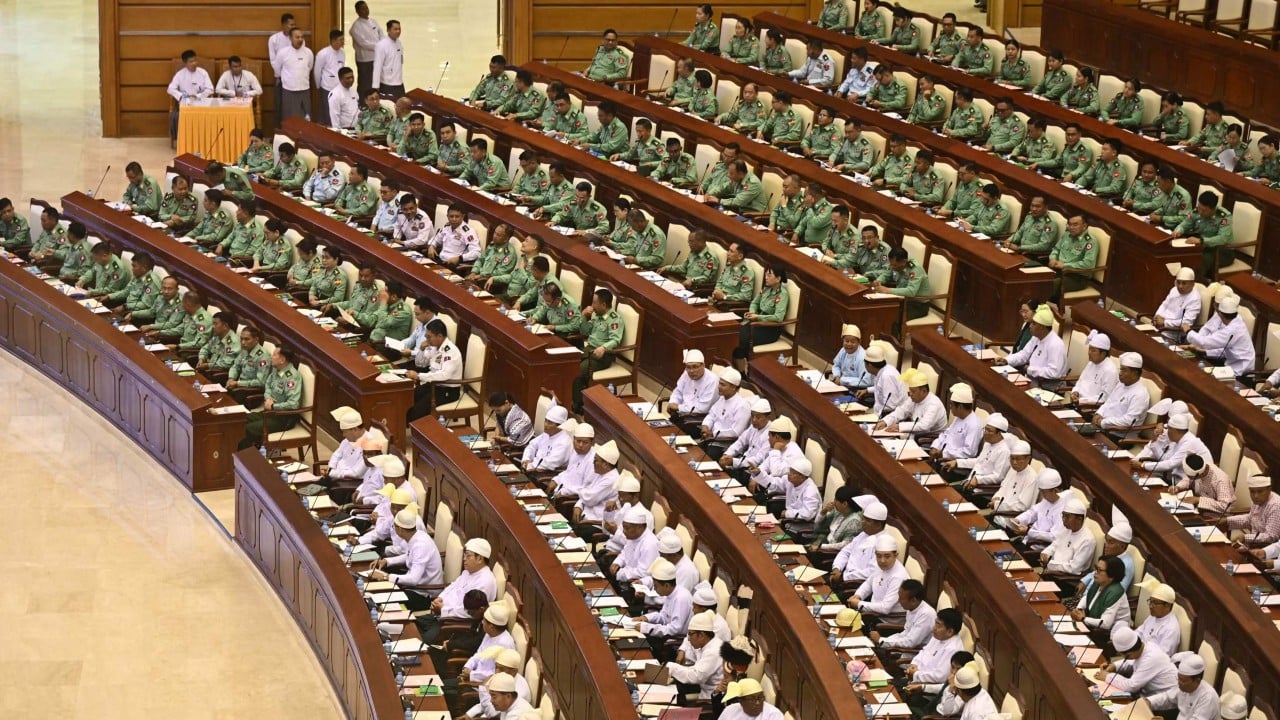
In Myanmar’s recent election, held across barely a third of the country, the army-backed Union Solidarity and Development Party (USDP) – created by the military in 2010 – won 81 per cent of available seats on a turnout of just 50 per cent in areas the military actually controls. Previous elections drew at least 70 per cent of voters to the polls.
Advertisement
On Monday, the USDP’s chairman, retired brigadier-general Khin Yi, was duly elected lower house speaker: a role analysts regard as pivotal for the military in steering its agenda through the new legislature.

Scores of hand-picked military officers will join elected members in the bicameral parliament, known as the Hluttaw, in keeping with a constitution that reserves one-quarter of all legislative seats for the armed forces. That concentration of power gives the top brass effective control over the chamber, including, crucially, the power to determine who becomes president.
Advertisement