


“Socalj” for Borderland Beat

In less than two years, Omar Guadalupe Ayon-Diaz and Osvaldo Contreras Arriaga laundered more than $45 million dollars for the Sinaloa Cartel, largely via money exchange houses in Tijuana.
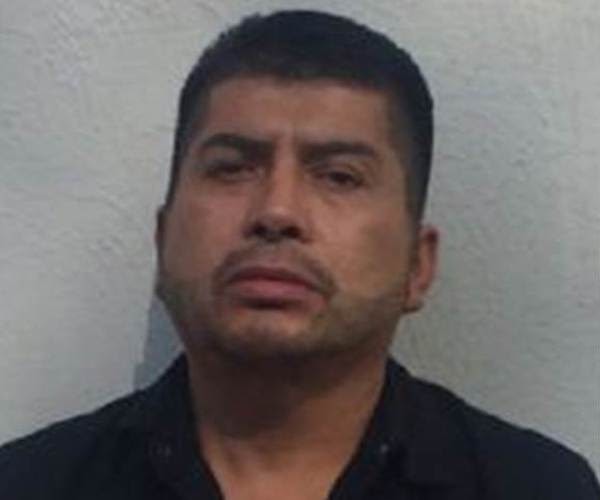
Omar, also known as “El Ahijado” (Godson) was wanted by the US on money laundering charges and was captured in Colombia in 2015. He was extradited to the United States and pleaded guilty to those charges in 2019 and was sentenced to 120 months (10 years) in prison.
Apparently, he had served the standard 85% of his federal prison sentence, having been released recently on April 27, 2023.
Just over 5 months later, he was found in Tijuana in the driver’s seat of a white SUV with a gunshot wound to the back of his head. Witnesses claim a man on a motorcycle, wearing a full-face black helmet pulled up to the car and shot him, a Ford Focus car was also seemingly involved in the hit, near the border in Nueva Tijuana. Both fled towards Avenida Bellas Artes heading to López Portillo.
 |
On Saturday, October 7, 2023, Omar Guadalupe Ayón Díaz, originally from Nayarit, was murdered in the Nueva Tijuana neighborhood in the Otay Centenario district. According to the police report, at 11:46 AM a radio call went out regarding a person with a gunshot wound inside a vehicle located between Josefina Rendón Parra streets and Bella Arte Avenue.


Omar was one of those involved and arrested for laundering more than $45 million for the Sinaloa Cartel (CDS) in the United States through exchange houses located in Tijuana and also through companies in Sinaloa.
 |
Background on “The Godson”
Omar Guadalupe Ayón Díaz was born on December 12, 1978. In 2010, Ayón Díaz acquired a loan of 50,000, granted by a textile businessman in the city, under the guarantee of land in the San Antonio de los Buenos district, which had been purchased 4 years before for 132,000 pesos. Although for years, the US authority followed in the footsteps of Omar Guadalupe Ayón Díaz and Osvaldo Contreras Arriaga, they had traveled and lived under the image of businessmen.
Omar started as a cashier in one of the more than 15 exchange houses owned by Miguel Ángel “Micky” Márquez Treviño, imprisoned since 2009 and accused of laundering money for the Arellano Félix Cartel. Since April 2013, in collaboration with a third man identified as Joel Acevedo Ojeda, “El Peludo,” conspired to transport and transfer monetary instruments and funds between Mexico and the United States to support a drug trafficking network.
In Tijuana, Omar Guadalupe Ayón Díaz presented himself as a moneychanger, attended public meetings and, accompanied by his bodyguards, moved between his different exchange houses to supervise their operation. One of these exchange houses is Centro Cambiario Titán, located in a small shopping center in the El Prado neighborhood, in front of the Municipal Auditorium. In a lawsuit filed before the Conciliation and Arbitration Board in Tijuana, with file number 6124/14, a former employee indicates Omar Guadalupe Ayón Díaz as the owner of this exchange center.
Ayón Díaz even showed up at the State Preventive Police (PEP) on January 2, 2014, to ask not to be bothered, since because he was a money changer he was constantly detained, he argued.
.png) |
After this, the Baja California Coordination Group reported that the Lira Sotelo family restructured itself to continue with activities related to drug trafficking such as executions, money laundering, extortion, and kidnappings. Another brother of the drug trafficker remained in charge of the cell, Javier Lira Sotelo “El Carnicero” or “El Hanibal.”
.png) |
Money Exchange Centers
In Tijuana, there are around 300 exchange centers, a quarter of those established throughout the country, according to figures from the National Institute of Statistics and Geography (INEGI). At least, each window of these exchange houses carries out daily operations for $15,000, whether in the sale or purchase of currencies.
Anti-money laundering experts explained that to launder money through an exchange house, operations are fragmented into transactions of less than $500 and thus the filing of reports is avoided.
As a second step, currencies are exported to the United States through companies dedicated to the purchase of dollars, which provide the equivalent in pesos of these amounts. “Exchange centers, by definition, cannot launder money because they have to deposit that money into the financial system, but if they already have bank accounts, then those pesos are deposited in them,” says another of the sources consulted.
 |
| Osvaldo Contreras Arriaga was also charged with cocaine trafficking. |
 |
“These couriers also smuggled dollars from Mexico to banks in the United States to make deposits and then make electronic bank transfers in Mexico with the money already converted to pesos,” the indictment indicates. The money, which was not deposited in bank accounts in Mexico, was delivered directly to the drug cartels, according to explained documents presented to the Court.
Although the accused used coded messages while communicating through Nextel radios and BlackBerry cell phones to organize the movement of drugs and dollars, the US was paying attention.
According to court records, in one instance in April 2014, Rodriguez and an individual referred to as “Doc” arranged for a southbound money courier to pick up $100,000 dollars from Philadelphia, Pennsylvania, and transport that sum to Mexico. “Doc” provided the courier’s identity to Rodriguez, who arranged the purchase of a plane ticket for the courier to travel to Philadelphia to make the pickup. When the courier landed, law enforcement conducted surveillance and then seized the $100,000 in cash on the courier’s person and in his hotel room.
Rodríguez Mejía, a Mexican lawyer, was in charge of coordinating the logistics of cash shipments, by means of planes and cars, so that they arrived at an exchange house in Tijuana, where the dollars were converted to pesos and deposited in bank accounts for the traffickers. He was also arrested in Tijuana in 2017, extradited, and sentenced to 96 months in prison.
.jpeg) |
Arrest, Extradition & Imprisonment
Red noticed by Interpol, wanted by US federal authorities and the Mexican PGR, Omar Guadalupe Ayon-Diaz, and Osvaldo Contreras Arriaga were far from keeping a low profile. They traveled from Culiacán, Sinaloa, to the border of Tijuana and towards the United States, ate lobster in the tourist area of Puerto Nuevo in Baja California, and were accompanied by a group of bodyguards.
.png) |
| Osvaldo Contreras Arriaga (left in white) and Omar Guadalupe Ayon Diaz (right in blue). Arrested in Colombia in 2015. |
On different days, the partners arrived in Cartagena, Colombia. The entry of Osvaldo Contreras Arriaga, on Wednesday, August 19, 2015, to the Núñez International Airport in Cartagena, activated alerts in the Colombian Immigration Department. Coming from Panama, the 27-year-old was identified as a member of the Sinaloa Cartel, according to the Interpol Red Circular issued by the United States government.
It was then that the location of his partner, Omar Guadalupe Ayón Díaz, who was staying in a hotel on the outskirts of the city of Cartagena, was sought. Colombian officers detained him for “the crimes of money laundering, organization, association or criminal group,” the Colombian authority reported. Like Contreras Arriaga, he had a Red Notice from Interpol. The two men remained in Colombia, from where they awaited extradition to the United States.
 |
In March 2015, a grand jury of the Southern District of California based in San Diego presented an indictment against Omar Ayón Díaz and Osvaldo Contreras Arriaga for the crimes of international conspiracy for money laundering and drug trafficking. cocaine. Omar Ayón Díaz is the owner and manager of several exchange houses in Tijuana.

As part of this case, more than 20 people have been arrested and Rodríguez Mejía is the fourth member to receive a sentence.
Ayón Díaz and Contreras Arriaga were sentenced to 10 years and 11 years in prison, respectively. Osvaldo Contreras Arriaga is accused of directing a cocaine trafficking network within the Southern District of California.
A fourth member of the network, named Joel Acedo-Ojeda, who, like his three accomplices, pleaded guilty, received a sentence of 11 years and three months in prison.