


Tadej Pogačar has long looked unstoppable in cycling’s biggest races.
The Slovenian two-time world champion continued in that vein on Sunday, winning a third monument victory of the year at the 259.5 kilometre-long Liège-Bastogne-Liège.
It was his third La Doyenne title in a row and fourth overall in a career that has seen him already claim 13 monuments — cycling’s five major one-day races: Milan-San Remo, Ronde van Vlaanderen, Paris-Roubaix, Liège-Bastogne-Liège and Giro di Lombardia.
However, this time it was not quite so easy, as 19-year-old French star Paul Seixas delivered an ominous reminder of his rising star with a powerful performance to take second place on debut.
No French rider has won the men’s Liège-Bastogne-Liège title since five-times Tour de France winner Bernard Hinault did so in 1980 — a victory in the midst of the last great era for French men’s road cycling.
The cupboard has been pretty bare in recent years in terms of a rider capable of regularly challenging the world’s best.
But, in Seixas, France has a(nother) new hope to pin its dreams on.
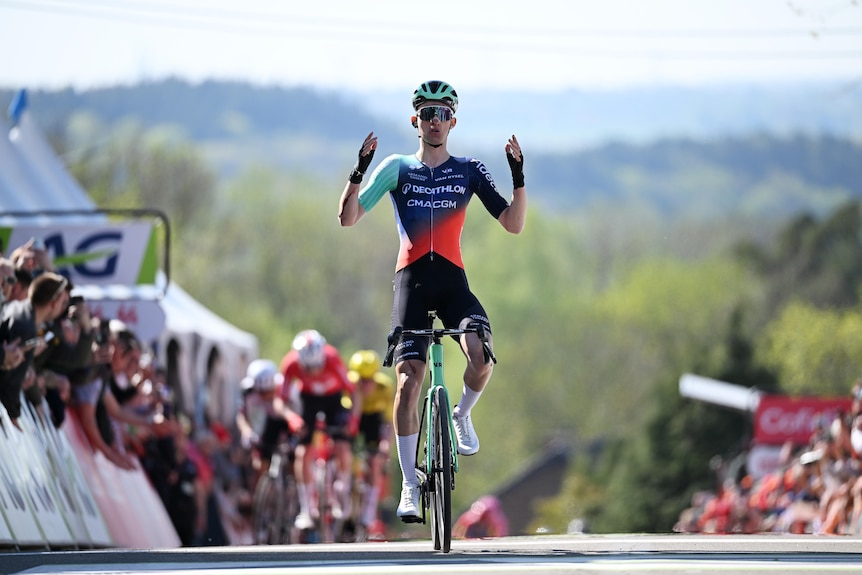
Paul Seixas won the 90th edition of La Flèche Wallonne with a sizzling attack up the Mur de Huy. (Getty Images: Dario Belingheri)
Winner of three stages and the overall classification at last week’s Itzulia Basque Country and the La Flèche Wallonne one-day classic on Wednesday, Seixas came into the fourth monument of the year in fine form and high on confidence.
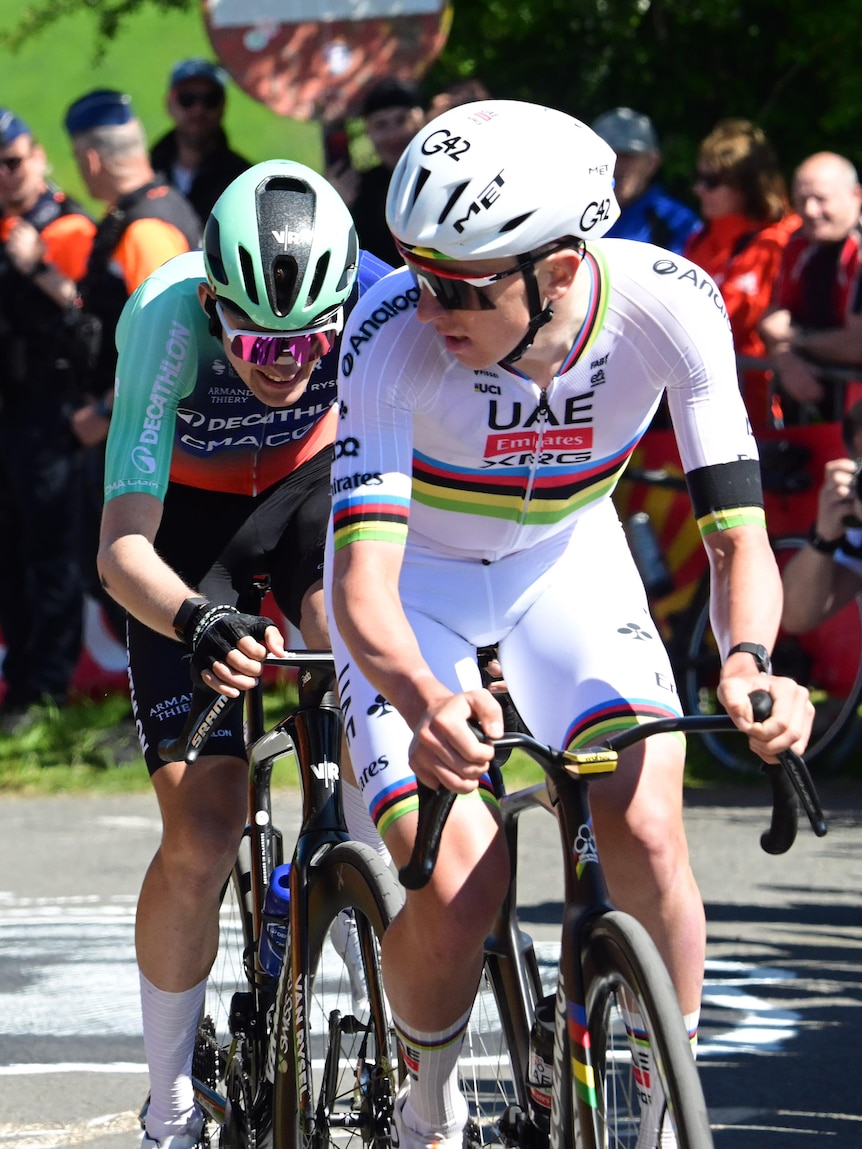
Pogačar launched his now-standard assault on the brutal Côte de la Redoute climb 35km from the finish, dropping the rest of the field with brutal efficiency.
However, alongside him was the teen Frenchman from the Decathlon CMA CGM team.
“I went really deep up La Redoute, and I could see Paul was struggling, but then he came near me across the summit,” Pogačar said at the finish, expressing his admiration.
Very few riders have the capability to ride with Pogačar when he launches his blistering attacks; too many have been burned by flying so close to the sun.
But Seixas not only soared along with the Slovenian superstar, but pulled his way to help the pair extend the gap.
Where far too many others have seen the wax melting from their wings, Seixas’s were barely clipped.
That is, until Pogačar sent the pace into the stratosphere to leave Seixas faltering on the final ascent up the Côte de la Roche-aux-Faucons with less than 14km left in the race, condemning the Frenchman to a lonely ride home for second, 45 seconds behind.
“He pulled quite strong all the way [to the Côte de la Roche-aux-Faucons] and because of this we were able to open a big gap,” Pogačar said.
“In the back of my mind, I was getting ready to go head-to-head on a sprint with him … luckily I managed to drop him.”
Expectation already reaching fever pitch of Tour de France assault
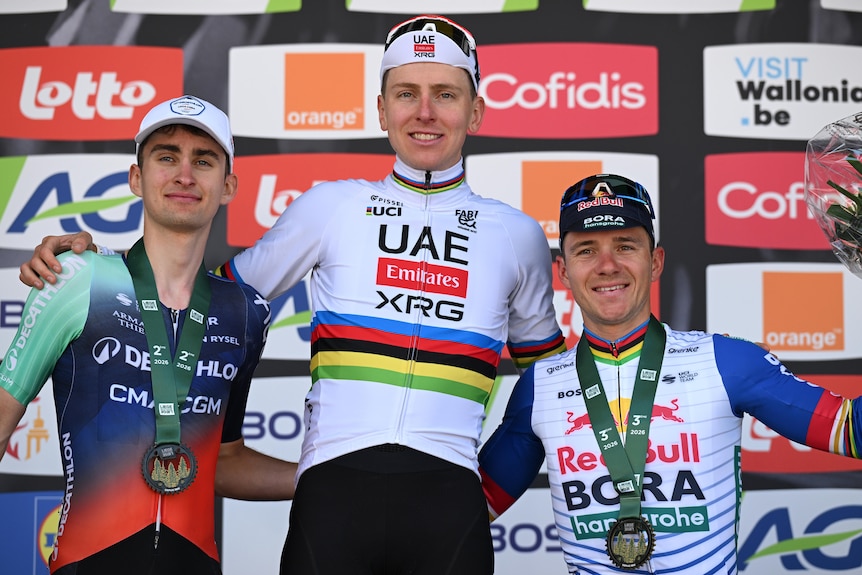
Could we see a podium made up of Paul Seixas (left), Tadej Pogačar (centre) and Remco Evenepoel (right) at the Tour de France? (Getty Images: Dario Belingheri)
With the spring classics campaign largely done and dusted, attention is now turning to the year’s grand tours.
The Giro d’Italia gets underway in May, but Pogačar will be absent from the quest for the maglia rosa, instead once more looking to France and a fifth victory in La Grande Boucle.
There is an expectation that Seixas will join him.
There is also a suspicion that Seixas may even challenge him.
“I am impressed and amazed by how good Paul is — chapeau to him,” Pogačar said.
“I have nothing but praise for the kid — for his incredible results at the start of this season, and for how mature he is.
“I don’t think there are many riders stronger than him right now.
“Having him at such a good level, being just 19 years old, is a source of motivation for everybody to keep trying to improve, he is just 19yo and the best age for us riders usually is 26 or 28.
“We have to keep working hard if we want to keep fighting for victories, before he destroys everybody.
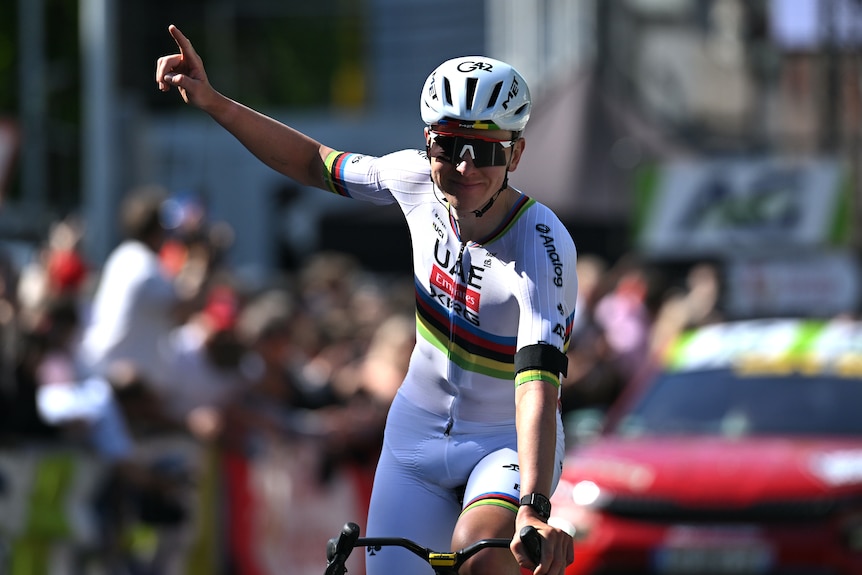
Tadej Pogačar has won four Liège–Bastogne–Liège races. (Getty Images: Dario Belingheri)
“I definitely know that every year it will become harder and harder for me to win. I’ve been doing this for a while now, and I’m not getting any younger. It’s a matter of time before I decline.”
Two-time Liège-Bastogne-Liège winner Remco Evenepoel, who is also expected to challenge for the Tour de France title in July and August, finished in third place in Liège.
He is under no illusions that Seixas will be a significant challenger in France later this year, despite his inexperience.
“It seems Paul was more than ready for a 6-hour race,” Evenepoel said of the question marks that had been raised over Seixas’s endurance.
“It was not surprising that he was able to follow Tadej up La Redoute, because we know his results and his performances from the previous months.
“He showed again today that he already is one of the best climbers in the world, and on top of this, has a great punch in him.
“The whole world can only say ‘chapeau’ to him. It’s great that he can already fight for the win in big races like Liège-Bastogne-Liège.”
Pressure to suffocate Paul? Not likely
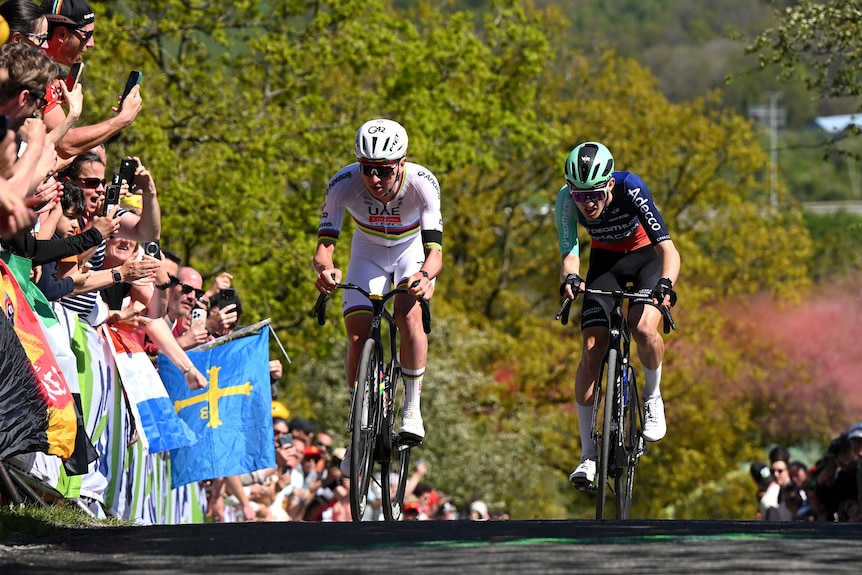
Is this a race situation we will see at the 2026 Tour de France? (Getty Images: Dario Belingheri)
The pressure on any pretender to the throne upon which France’s fanatical cycling supporters place their champions is unparalleled.
It’s a lot for any rider to handle, let alone one so young.
French monument winners this century Thibaut Pinot, Arnaud Démare and Julian Alaphilippe have all at one stage carried the burden of expectation upon their shoulders and found that carrying that across the passes of the Alps and Pyrenees is too much of a load to bear.
The expectation in the French press is already in danger of being suffocating — there has even been an unsubstantiated rumour that President of the Republic Emmanuel Macron intervened to keep Siexas at his French team Decathlon, rather than fall into another team’s hands, such would be the glory to France if he were to win Le Tour with a French team.
But Seixas has stayed calm.
“You have to take things one step at a time, without rushing,” he said.
“At Strade Bianche [where Siexas finished a distant second behind Pogačar], I couldn’t follow his first attack; today I managed to do it, so I’m quite happy with my performance.
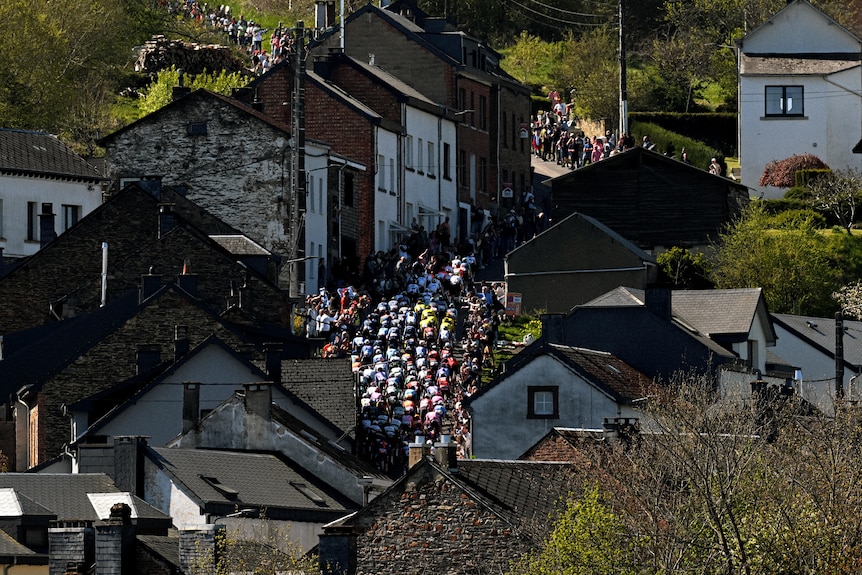
Seixas has proven he can do it in the Ardennes, what about across three weeks of France’s most varied landscapes? (Getty Images: Dario Belingheri)
“I always race to win, but we know that Pogačar has been utterly dominant these last few years, so just being able to follow him is already something.
“Just keeping up with Pogačar is extremely difficult. He’s one of the greatest riders of all time, so being able to hang on to him, to fight with him all the way to Roche-aux-Faucons.
“There’s still work to be done, and that’s normal; we mustn’t rush things, but be satisfied with what we got today.”
Seixas acknowledged that he was “completely exhausted” by the time the race got to La Redoute, describing the pace as “insane” and that he was already in “uncharted territory” given the superior length of monuments compared to most other one-day races.
However, he said that he had made a “step forward” with his endurance” and his attributes suited repeat efforts.
“How hard the race was almost works to my advantage because I can repeat efforts and recover quite well from them, as we saw at the Tour of the Basque Country,” he said.
“It’s very satisfying for the future.”
That last sentence is a phrase likely to be gobbled up by the French press as they start their campaign for him to start the Tour de France for the first time in his fledgling career later this year.
But Seixas knows that he needs to be patient.
“My next ambition will be to win a Monument,” Seixas said.
“There are no certainties in life regarding the future: until you’ve done it, you haven’t done it. I’m just going to work towards it.”
dan