


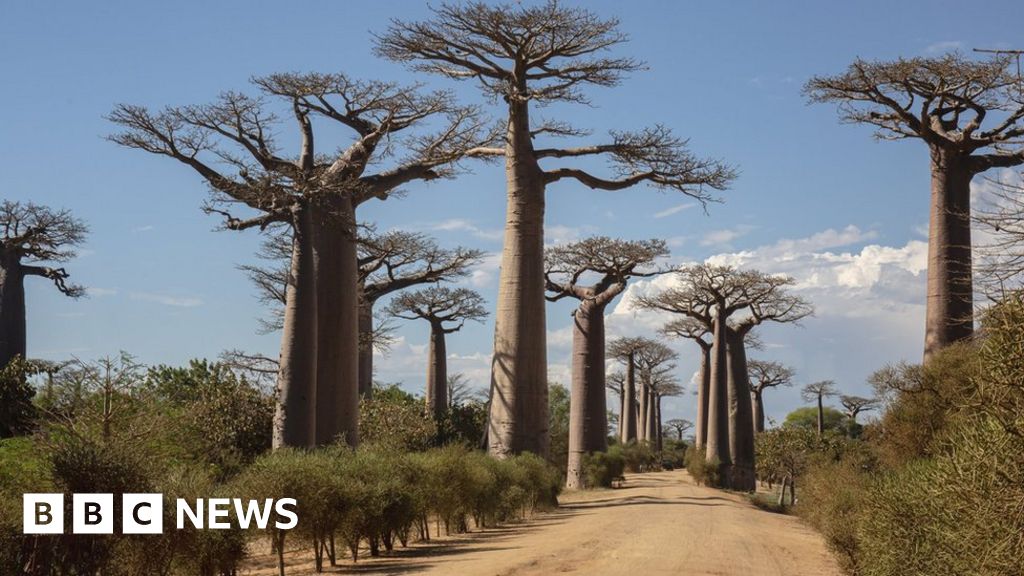
Baobabs are one of the most remarkable trees on earth, deeply intertwined with local cultures and traditions.
They are also known as “mother of the forest” in Malagasy language, the “upside down tree” and the “tree of life”.
The trees can live for thousands of years, growing to a huge size and storing large amounts of water in their trunks to survive through the dry seasons.
Their fruits are regarded as a super food and their trunk can be used to make fibres which are used for ropes or clothing.
They produce large white flowers that open at dusk, attracting bats as pollinators, which travel vast distances to feed on their nectar, and they are important nesting sites for birds.
The research involved collaboration between Wuhan Botanical Garden (China), Royal Botanic Gardens (Kew, UK), University of Antananarivo (Madagascar) and Queen Mary University of London (UK).
Follow Helen on Twitter @hbriggs