


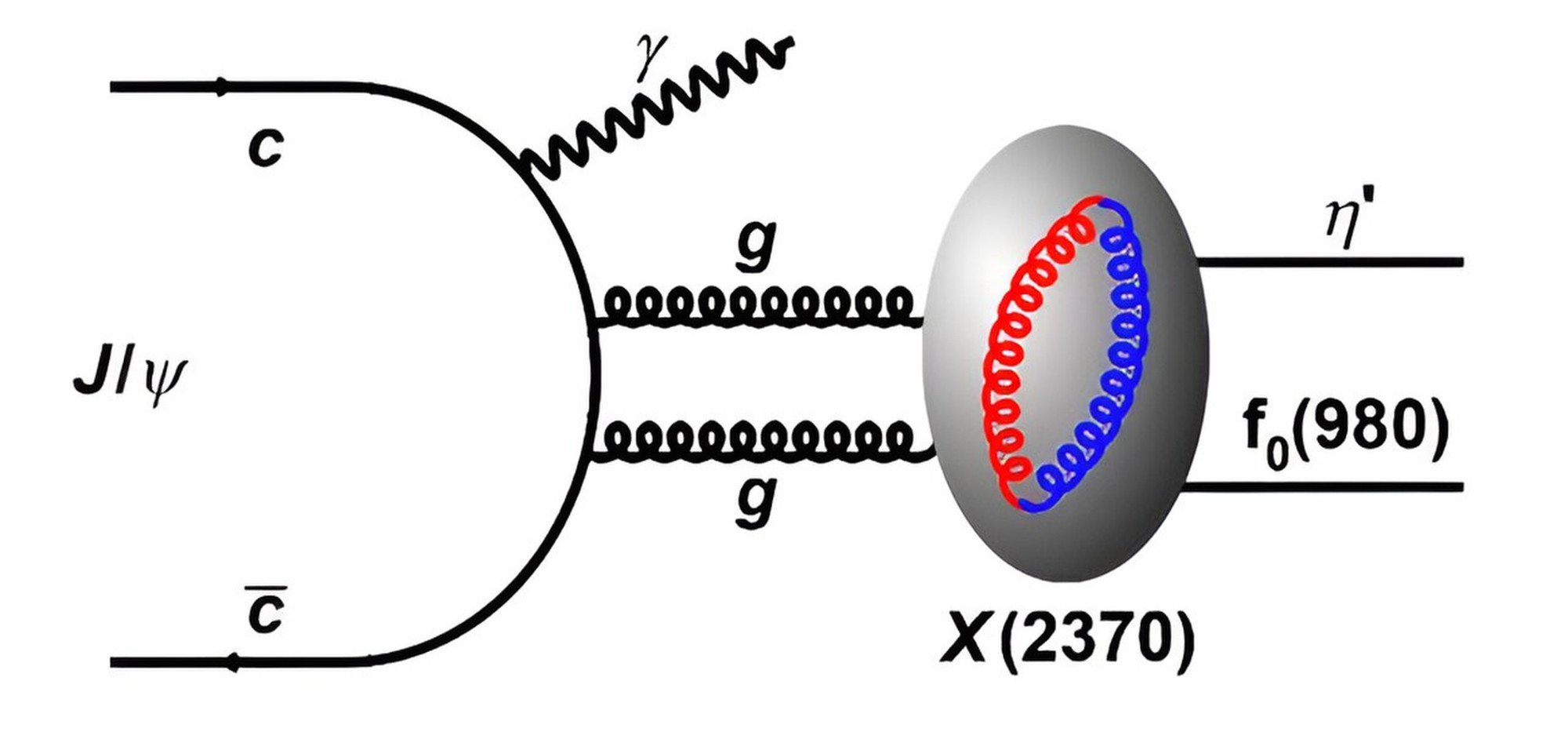

They are not only unique as the only particles made of pure force, but also elusive – no one has ever seen or detected one before.
Looking at its key properties, including its mass and spin, the team found it was a good match for those predicted in glueballs that comprise two gluons.
The research, which involved around 600 scientists across 17 countries, was detailed in a report this month in the journal Physical Review Letters.
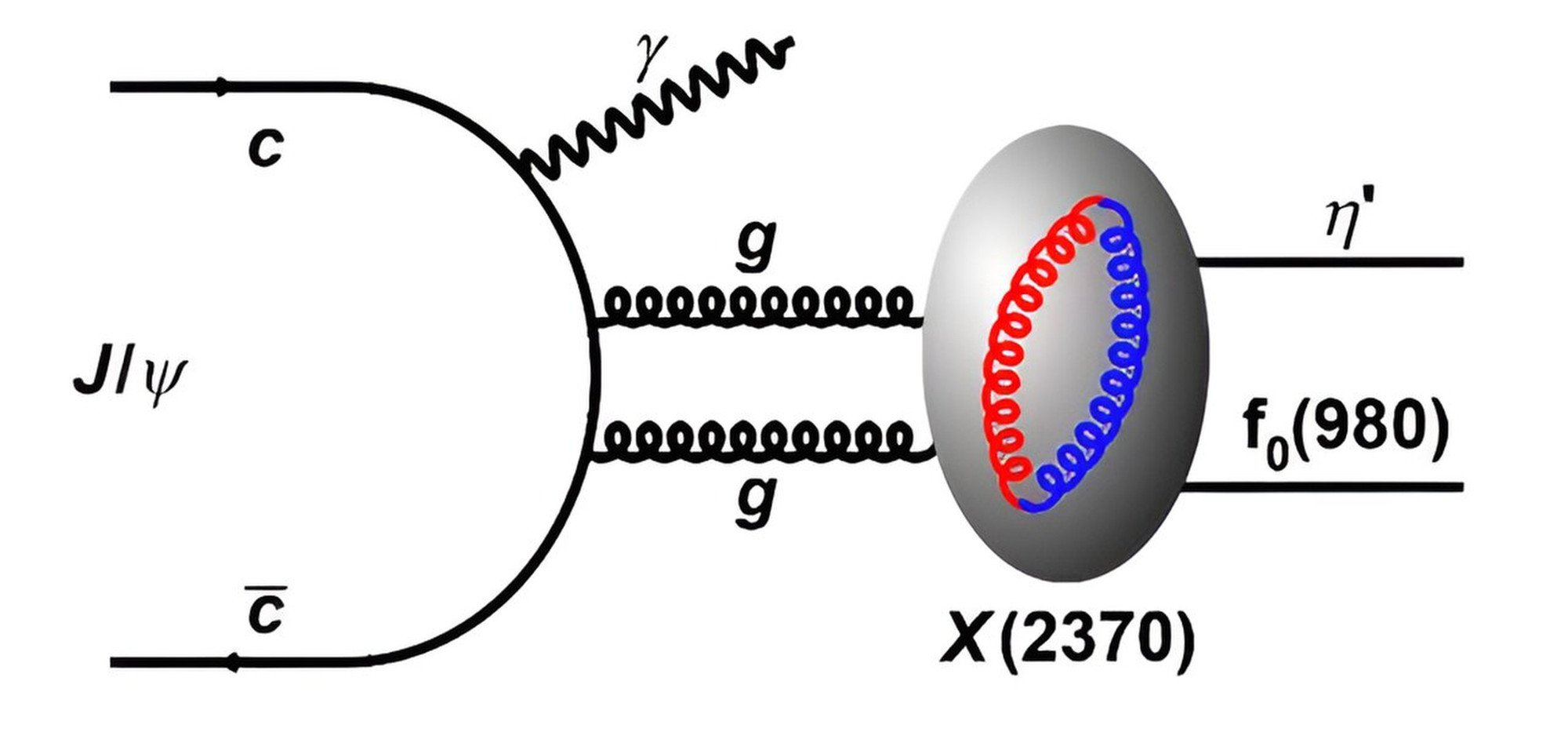
“Our results are consistent with the features of the lightest glueballs predicted by the Standard Model, and therefore provide strong evidence in support of the existence of glueballs,” said Jin’s colleague Huang Yanping from the Institute of High Energy Physics in Beijing.
The researchers reported a whopping 11.7-sigma statistical significance for their results. In particle physics, 5-sigma significance is the gold standard for announcing a bona fide discovery, meaning that there is a 0.00006 per cent chance for the study to be a statistical fluke.
While experimentalists celebrated the detection, theorists cautioned that more work is needed to confirm if those were pure glueballs, or glueballs mixed with conventional particles made from quarks.
“In the theoretical world where there are only gluons, but no quarks, glueballs are well-defined particles,” theoretical physicist Craig McNeile from the University of Plymouth in Britain, said.
Therefore, the X(2370) particles could be something else, such as an excited version of the so-called eta mesons, which are mostly made of quarks and antiquarks, he said.
Future experiments in China and Europe should be able to do more analysis and help rule out such scenarios if the particles were indeed isolated glueballs, he added.
Frank Close, emeritus professor of theoretical physics at Oxford University, hailed the study as “tantalising” and “encouraging”. However, he told the Post that the idea of a pure glueball was simplistic.
“This is at least an interesting step along the way,” Close said. “Until it is replicated in further experiments, I remain cautious.”