


Jobanis de Jesús Ávila Villadiego alias ‘Chiquito Malo’
| Name | Jobanis de Jesús Ávila Villadiego |
| Alias | Chiquito Malo |
| Country | Colombia |
| Criminal Group | Gaitanist Self-Defense Forces of Colombia (Autodefensas Gaitanistas de Colombia – AGC), which is also referred to as the Gaitanistas, Urabeños, and the Gulf Clan (Clan del Golfo) |
| Location | Unknown |
| Status | Fugitive |

As the leader of one of Colombia’s most powerful crime groups, Jobanis de Jesús Ávila Villadiego, alias “Chiquito Malo,” keeps a low profile.
Like the AGC, he was born in Urabá, in northwestern Colombia. Chiquito Malo began as a paramilitary fighter with the United Self-Defense Forces of Colombia (Autodefensas Unidas de Colombia – AUC). When the group demobilized in 2004, he joined the dissident faction that abandoned the process.
Due to his experience and knowledge of the Urabá area, Chiquito Malo quickly ascended the ranks, and became the commander of the AGC’s Central Urabá Structure. By 2015, he was indicted by the US government as one of the group’s top leaders.
That same year, the Colombian government launched Operation Agamemnon against the AGC. Authorities attempted to capture Chiquito Malo in a raid in Urabá, Antioquia. Three men on his security team were killed, and four were captured, but Chiquito Malo escaped.
Since then, his whereabouts have remained unknown, but his power has only grown.
Operation Agamemnon continued, capturing and killing several top AGC commanders. In 2021, the operation finally nabbed the AGC’s notorious leader, Dairo Antonio Úsuga, alias “Otoniel,” who was extradited to the United States and sentenced to 45 years in prison. In his stead, Chiquito Malo took the helm.
Under his leadership, the AGC has nearly doubled in size, becoming one of Colombia’s largest criminal structures, with a presence in more than half of Colombia’s departments. The group is now a sprawling network of more than 7,000 members that dominates drug trafficking, illegal mining, and migrant smuggling across northern Colombia.
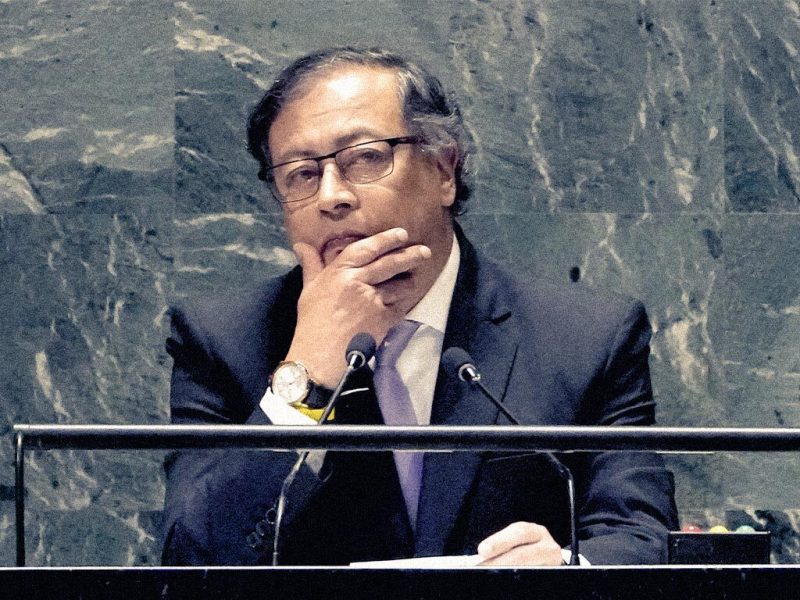
In 2022, the AGC indicated their willingness to participate in negotiations with the Colombian government under President Gustavo Petro’s Total Peace plan. But the negotiations have made little progress.
Today, he is Colombia’s most wanted criminal, with a reward of 5 billion COP (more than $1 million) for his capture. In addition to his ties to various illegal economies, the government also accuses him of orchestrating several plan pistola attacks — targeted killings of police officers — that have left multiple police officers dead.
The Gaitanist Self-Defense Forces of Colombia (Autodefensas Gaitanistas de Colombia – AGC) are known by many names: the Gulf Clan, the Urabeños, and the Gaitanistas.
The group emerged from the ashes of Colombia’s paramilitary movement, when Vicente Castaño, paramilitary commander of the AUC, led a faction that split from the group’s demobilization process in 2006.
In the years that followed, the group came to dominate Urabá, the northwestern region of Colombia near the Panamanian border, which is highly prized by drug traffickers for its access to both the Caribbean and Pacific coasts. The group has become the de facto authority in the area, controlling every aspect of life.
The group also developed a unique franchise structure: About one-third of local AGC cells answered directly to AGC leadership in Urabá, and the others were local criminal groups that used the AGC name in exchange for providing services when called upon.
Using this model, the group expanded rapidly and widely, establishing a presence in more than half of Colombia’s departments and becoming the dominant criminal force in much of the country. The AGC’s main activity has long been drug trafficking, with control over drug production zones, trafficking corridors, and international dispatch points throughout northern Colombia, along both the Pacific and Atlantic coasts, and along the land border with Venezuela.
But the group is also involved in other criminal economies. The franchise model means that local cells that are financially self-sufficient. As a result, many pursue criminal economies outside of drug trafficking, such as illegal mining, extortion, migrant smuggling, and microtrafficking. These groups may also direct or tax other criminal activities within their territory.
The Gaitanist Self-Defense Forces of Colombia

Dig deeper:
In this special series, InSight Crime tracks the Total Peace policy’s effects on organized crime.

The Endless Battle for Bajo Cauca: Colombia’s Criminal Crown Jewel
Today, a resurgence of violence in Bajo Cauca has been sparked by clashes between Colombia’s three main criminal actors, and communities are being caught in the crosshairs.

The Dragons of Chocó: Illegal Gold Mining in Colombia’s Rivers
Just 20 kilometers from the capital of the department of Chocó, illegal gold mining has devastated the Quito River, one of the tributaries that feeds the main fluvial highway of the region: the Atrato River. Under the pressure of armed groups, this poisonous trade has rapidly overtaken the ecosystems and communities that live there.

Podcast Series: The Shadow of El Dorado
Colombia is home to a billion-dollar black market gold sector that funds armed groups and organized crime, fuels corruption, and has a devastating environmental impact. It is, in short, an epicenter of the global trade in blood gold.

Annual Special
*Summer InSights 2025
This year, we are featuring several of the region’s biggest crime lords from four countries: Ecuador, Venezuela, Colombia, and Mexico. In each, we examine a different kingpin’s rise to power, explore their influence on the national and regional crime scene, explain the ins and outs of criminal power struggles, and detail their dramatic arrests and escapes.