


High levels of crime in Latin America and the Caribbean are costing the region’s economies billions each year, according to two new reports that came to the same conclusion using different methods.
The Inter-American Development Bank (IDB) recently released an updated edition of its 2015 and 2017 reports called “The Cost of Crime and Violence,” which aims to quantify the economic impacts of violence and crime in Latin America and the Caribbean to provide a foundation for effective solutions.
The International Monetary Fund (IMF) also released a report examining the relationship between crime, insecurity, and the macroeconomy in the region.
Both documents show that crime and violence hurt local and national economies, reinforcing past findings. Below, we examine how these studies deepen our understanding of the economic damage caused by organized crime and its potential policy implications.
How Much Does Crime Cost?
Both reports agree that the costs of crime are huge.
The IDB frames costs in terms of GDP, concluding that the average direct price of crime and violence in Latin America and the Caribbean is 3.5% of GDP. In a region whose collective annual GDP is trillions of dollars, this translates into hundreds of billions of dollars in economic fallout region-wide each year.
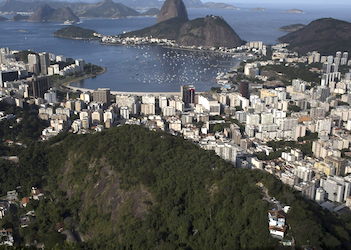
For Brazil, which has the largest economy in the region, that meant a loss of $76 billion in 2023 and nearly $63 billion for Mexico, the second largest.
The IMF, on the other hand, reports that when homicides increase by 10%, local economic activity declines by 4% at the municipal level. The report found that perceptions of crime matter, too; a 10% increase in the share of crime-related news is associated with a 2.5% contraction in industrial production. The organization emphasizes the importance of looking at data on a local level, pointing out that homicides vary significantly within countries and that “national averages mask significant regional differences.”
Homicides directly impact the economy because victims who are killed no longer participate in the market as workers or consumers. Victims who aren’t killed by the crimes to which they are exposed still often stop working temporarily, too. Criminals who are caught and imprisoned don’t contribute to the legal economy. Similarly, crimes like extortion, robbery, and smuggling take money out of the legitimate economy and put it into criminals’ pockets.
Additionally, violence and criminality suppress economic activity by forcing companies to avoid or relocate from high-crime areas. Crime can also contribute to decreased labor productivity, affecting workers’ ability to get to their jobs or perform them safely. High crime rates can also produce other economic impacts like decreasing tourism or encouraging migration.
Resources spent on security also tend to mount in both the public and private spheres. The IMF estimated that public expenditures on security amount to almost 2% of regional GDP.
“These are resources that in a scenario without crime and violence could be used for alternative purposes to increase social well-being,” according to the IDB.
Crime can also contribute to instability and inequality, creating a vicious cycle where each phenomenon feeds the others.
How to Measure the Costs of Crime
The reports from the IDB and IMF experiment with new methods for quantifying the economic impacts of crime. While the IDB attempts to quantify the cost at a regional level, the IMF examines the perception of crime on a more local level.
As with other similar studies on violence, both reports rely heavily on homicide rates and other official data. However, many crimes are significantly underreported, meaning the organizations’ calculations are likely underestimates.
The IDB breaks direct costs down into the money spent by private and public entities on crime prevention, human capital costs (calculated as the cost of the loss of individual productivity due to injury, death, or imprisonment), and public money spent in response to crimes.
SEE ALSO: Financial Vulnerability Fuels Predatory Crime in Peru
The regional development bank also examines the literature on indirect costs. Although these remain difficult to quantify, the IDB presents three case studies that confirm that a rise in crime hurts tourism and economic development and correlates with a rise in migration.
The IMF’s approach is more qualitative. It examines the drivers of crime and its impact on public and private spending.
The analysis uses nightlight data, which measures the amount of light in an area, as an indicator of economic activity. It compares it with changes in crime levels, using homicide rates, victimization surveys, and reports on organized crime.
The IMF also monitors and analyzes crime-related news to avoid “discrepancies between indicators of crime, victimization, and perceptions,” describing the process as an “innovative measure of insecurity.”
How to Address the Problem?
Both reports recommended gathering more data and applying improved analytics to implement targeted investment strategies and tailored interventions based on evidence.
For example, the IDB recommends using this data to target high-risk groups by promoting rehabilitation, social reintegration, and alternatives to prison for minor crimes.
The IMF suggests using data and analytics on crime to identify “pockets of fragility” where authorities can develop specific initiatives, making the most efficient use of limited resources.
Both institutions reiterated common policy suggestions, like supporting the private sector to bolster security, increasing international cooperation, building effective institutions, improving education, and strengthening anti-money laundering policies.
Featured image: Brazil, the region’s largest economy, lost $76 billion in 2023 thanks to crime and violence, according to the IDB. Credit: Associated Press.